July 2016 Issue |
||||||||
 |
||||||||
IN THIS ISSUE: |
||||||||
• Subscribe to Meat Goat Mania • Email Us • Onion Creek Ranch • Bending Tree Ranch • OCR Health & Management Articles • MGM Archive |
||||||||
 |
|
|
|
|
|
|
|
|
|
|
|

|
|||||||||||||||||||||||||||||||||||||||||||||||||||||||||||||||||||||||||||||||||||||||||||||||||||||||||||||||||||||||||||||
PERIPARTURIENT EDEMA IN A HEAVILY-PREGNANT DOE Usually occurring during the last six weeks of a doe's pregnancy, periparturient edema is a very uncomfortable swelling and irritation caused by fluid accumulation within the tissues underneath the skin. The first indication is usually the doe's walking as if her feet hurt, followed by a gradual swelling in the lower part of her front legs and progressing to the lower half of her rear legs. Initial symptoms are so generalized that you can can mistakenly diagnose laminitis/founder. Unlike ketosis or other pregnancy-related diseases, periparturient edema does not cause the doe to go off-feed. She will be listless, preferring to sit rather than stand because walking is painful, but she will continue to eat. Moaning, groaning, and grinding of teeth are common symptoms. Periparturient edema usually appears in a doe that is carrying multiple large fetuses. She may have kidded before without similar problems and she may never have it again in future pregnancies. The fetuses are taking more out of her body than she can replace, putting her in a nutritional deficit condition. Edema is accompanied by increased blood pressure, decreases in blood proteins, and blockages in the body's lymph system (one of the body's main filtration mechanisms). First step in diagnosis is to do fecals to check for worms because a heavy wormload can bring on periparturient edema. Even if she has been recently dewormed, deworm the doe again. Do not use Valbazen or Safeguard/Panacur dewormers. The white-colored dewormers don't kill barberpole stomach worms (Haemoncus contortus) in most of the USA any longer. Supportive care is about all you can do to help a doe with periparturient edema. Keep her as comfortable as possible, but make her get up and walk short distances several times a day, and provide her with proper nutrition. No special supplement or diet is required. Definitely do not dramatically change her diet. When kidding (parturition) occurs, you must be available and ready to help the doe stand to feed her kids during their first 48 hours of life. After that timeframe, the swelling should begin to go away and standing won't be difficult for her. Milk production should not be affected by this condition. Suzanne W. Gasparotto, Onion Creek Ranch, Texas 7/1/16 |
|||||||||||||||||||||||||||||||||||||||||||||||||||||||||||||||||||||||||||||||||||||||||||||||||||||||||||||||||||||||||||||
Consultation & Evaluation Services for Hire I've decided to expand my business to include consultation & evaluation services for people who are either thinking about raising meat goats or are currently raising them and want to improve their operations Please contact Suzanne W. Gasparotto at 324-344-5775 or email at onioncreek@tennesseemeatgoats.com |
|||||||||||||||||||||||||||||||||||||||||||||||||||||||||||||||||||||||||||||||||||||||||||||||||||||||||||||||||||||||||||||
|
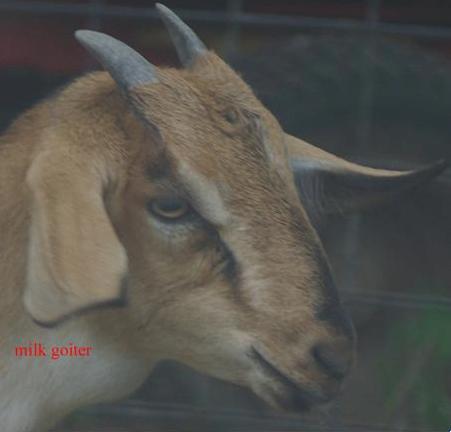
A soft swelling on the front of the throat where the chin meets the neck of a young kid is a "milk goiter." Sometimes also called "milk neck," it occurs around three weeks of age and can last until eight or nine months of age. It is normal, nothing to be concerned about, and should be left alone. This soft swelling occurs in kids of dairy and dairy-influenced breeds (this includes Boers and Kikos, both breeds being heavily dairy influenced) and is an enlargement of the thymus gland. It is not caseous lymphadenitis and it is not iodine deficiency. Do not supplement the kid with iodine; iodine toxicity is easy to cause. Milk goiter is sometimes associated with heavy-milking breeds. An enlarged thymus gland is part of the development of a good immune system in many juvenile mammals, including goats. When this soft swelling disappears, it sometimes leaves a pocket of loose skin. Suzanne W. Gasparotto, ONION CREEK RANCH, Texas 7/1/16 |
|||||||||||||||||||||||||||||||||||||||||||||||||||||||||||||||||||||||||||||||||||||||||||||||||||||||||||||||||||||||||||||
 |
|||||||||||||||||||||||||||||||||||||||||||||||||||||||||||||||||||||||||||||||||||||||||||||||||||||||||||||||||||||||||||||
|
|
|
|
|
|
|
|
|
|
|
|||||||||||||||||||||||||||||||||||||||||||||||||||||||||||||||||||||||||||||||||||||||||||||||||||||||||||||||||||



|
||||||||||||||||||||||||||||||||||||||||||||||||||||||||||||||||||||||||||||||||||||||||||||||||||||||||||||
|
|
|
||||||||||||||||||||||||||||||||||||||||||||||||||||||||||||||||||||||||||||||||||||||||||||||||||||||||||


|
||
|
|
|
|
||||||||||||||||||||||||||||||||||||||||||||||||||||
|
|
|
||||||||||||||||||||||||||||||||||||||||||||||||||

